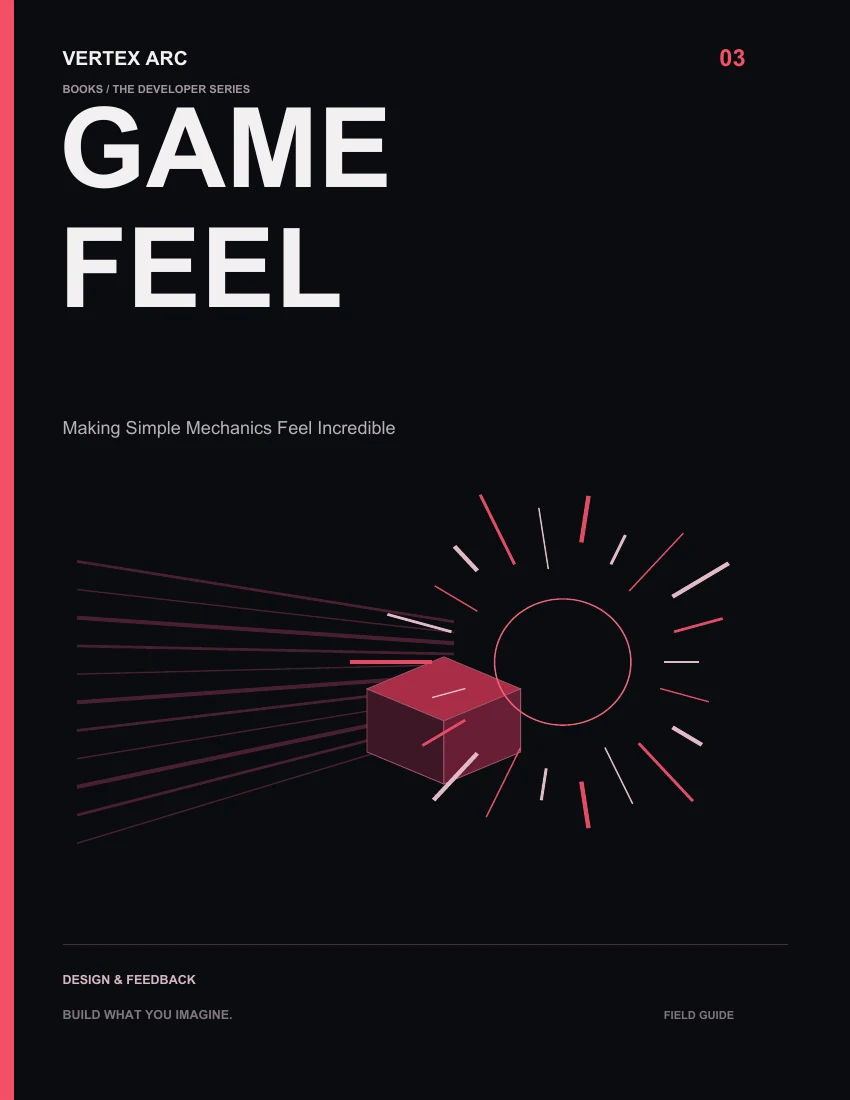
Design & Feedback
Game Feel
Make movement, combat, and interaction feel intentional. Tune the relationship between input, motion, camera, animation, sound, and impact.
15 pages · 14 min read · PDF

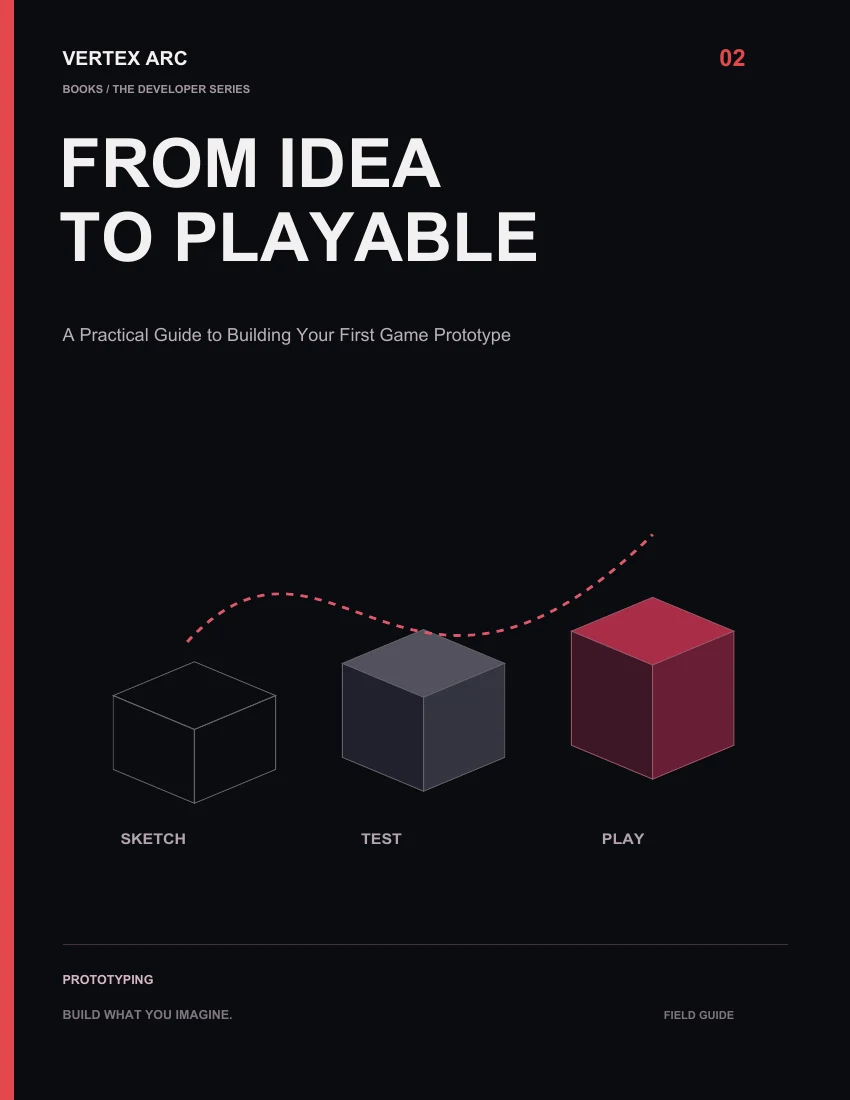
Volume 02 / Prototyping
A Practical Guide to Building Your First Game Prototype
Turn a promising idea into a small, testable game. Find the loop, control scope, learn from players, and decide what deserves production.
First edition · October 2026 · Published by Vertex Arc
Inside the guide
Also includes an introduction, practical exercises, a final checklist, and a conclusion.
A first prototype is not a smaller version of every feature in your imagined game. It is a playable experiment that helps you decide what deserves more work. You might want to create a delivery adventure across a floating city. The first useful build may contain a courier, three platforms, one parcel, and a timer. Its job is to answer whether carrying that parcel changes movement in an interesting way.
This book follows that original hypothetical project, Parcel Run. The courier can move quickly while empty-handed, but a fragile parcel changes acceleration and landing behavior. The example stays deliberately small so we can discuss decisions without hiding behind a large world or an elaborate story. You can substitute your own mechanic at every step.
Use the chapters in order if this is your first project. If you already have a prototype, begin with the chapter that addresses its biggest uncertainty. Keep a playable build, a one-page question sheet, and a short decision log. Those three artifacts will tell you more about progress than a long list of features marked partly complete.
The goal is to finish with evidence: what players understood, what they chose to repeat, what broke, and what remains risky. A prototype that leads you to change direction has done useful work. The only wasted experiment is one that never asks a clear question or refuses to use the answer.
An idea describes a possibility. A game contains rules that produce actions and consequences over time. Move from the first to the second by writing a player verb and the decision attached to it. "Explore a beautiful floating city" is a setting promise. "Choose a safe route or a faster jump while carrying a fragile parcel" is a testable interaction.
Write down the uncertainty that could most change your plan. It may be whether carrying an object creates a useful tradeoff, whether players can judge jumps from the camera, or whether the control scheme is understandable. Choose one as the first target. A prototype trying to answer all three at once may fail without revealing why.
Parcel Run begins with a route-selection question. Both paths reach the same destination. One contains broad platforms; the other has shorter but narrower landings. The parcel can survive one rough landing. There are no shops, missions, or upgrades because none are required to see whether the player weighs speed against risk.
Describe the choice the player makes, not only the world in which they make it.
Write your concept in one sentence using a verb, a constraint, and a consequence. Then list the objects needed for one attempt. If the list includes several unrelated systems, remove everything that does not help answer the first question. Ask another person to explain what they expect to decide during play.
Keep technical feasibility questions separate from design questions. A local prototype can test route choice without proving online synchronization or mobile performance. Name the limits of the evidence you collect.
Design & Feedback
Make movement, combat, and interaction feel intentional. Tune the relationship between input, motion, camera, animation, sound, and impact.
15 pages · 14 min read · PDF
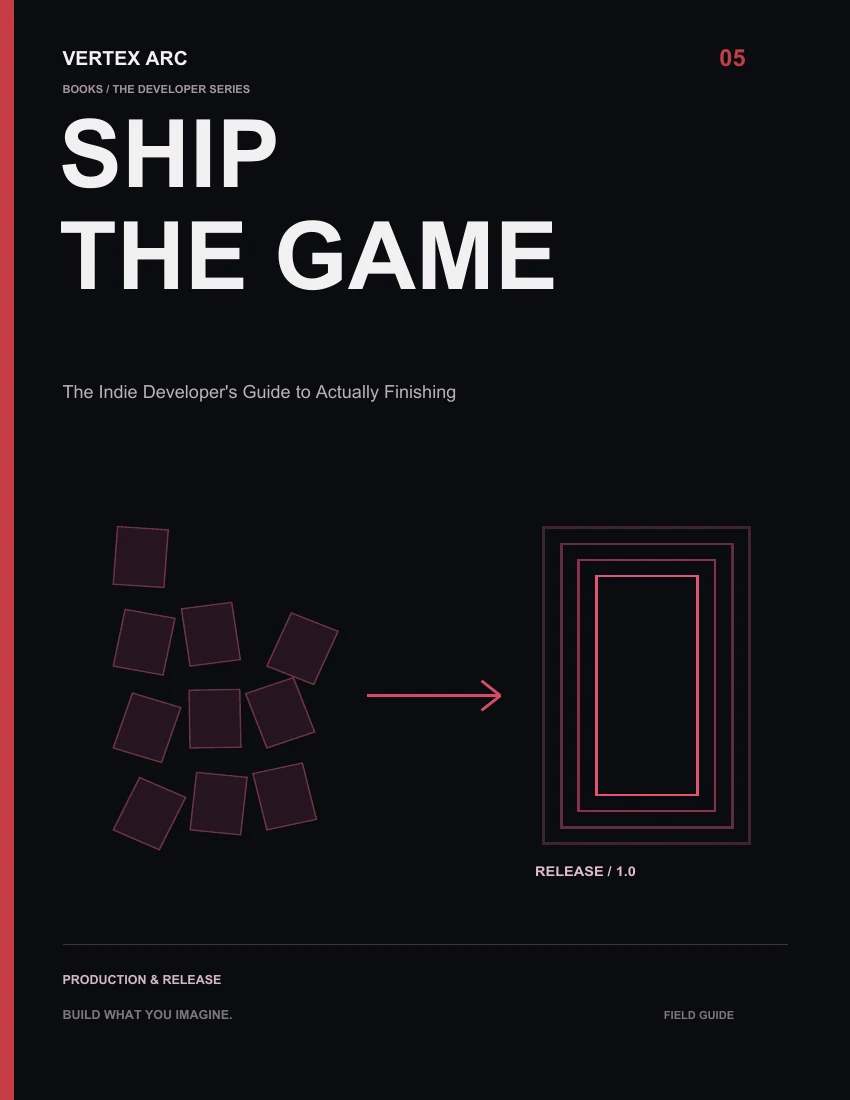
Production & Release
Finish a game you can stand behind. Define a useful minimum, build complete slices, cut with purpose, manage bugs, and prepare a dependable release.
17 pages · 16 min read · PDF