Art & Graphics
From Greybox to Final Environment: Keep the Level Playable
Move from spatial questions to finished art without losing navigation, pacing, or gameplay clarity.
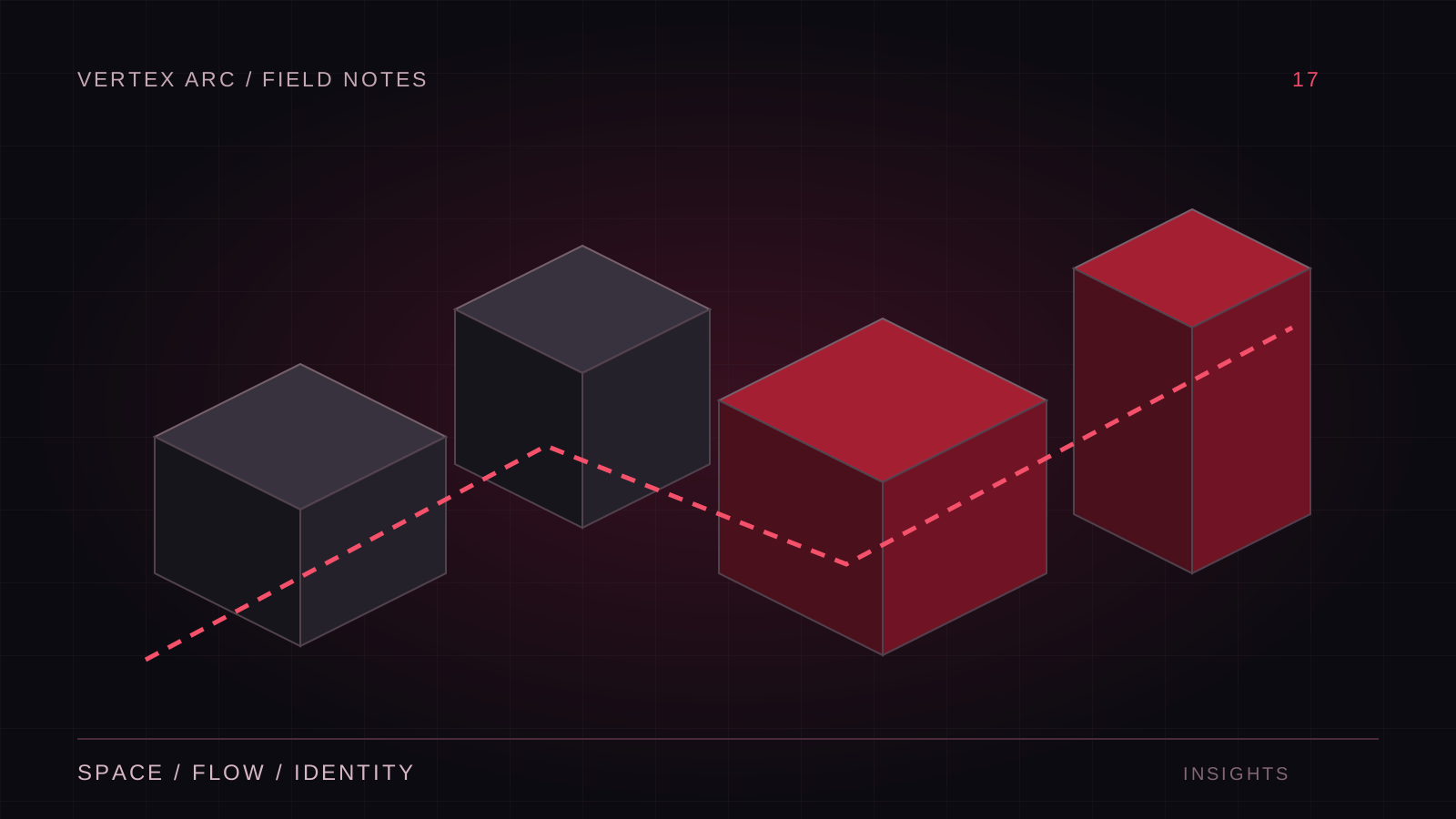
A level is first a sequence of spaces and decisions. Its art gives those spaces identity, but the layout needs to support movement, encounters, and pacing before detail makes changes expensive. Greyboxing creates a low-cost way to test those relationships with simple geometry.
Begin with the purpose of the level. Is it teaching a mechanic, testing mastery, offering exploration, or changing the pace? A clear purpose helps decide what belongs in the space and what distracts from it. It also makes feedback more specific than “the level feels empty.”
Establish scale through movement
Build with the actual player controller and camera as early as possible. Door widths, jump distances, ceiling heights, and cover dimensions only make sense relative to how the player moves and sees. A layout that looks convincing from an editor camera can feel cramped or confusing at player height.
Create reusable reference measurements for common spaces, but do not let them replace playtesting. A wide corridor can still feel restrictive if the camera collides with nearby geometry. A short distance can feel long if the route offers no decisions or useful information.
Map the intended flow
Identify entrances, goals, landmarks, optional routes, and moments of pressure or relief. Sketch the relationships before filling the scene with objects. Then test whether a new player can infer the route from the space itself. Their path may reveal an unintended shortcut or a misleading visual emphasis.
Use landmarks as orientation tools
A distinctive structure can help players locate themselves without constant interface guidance. It should remain recognizable from relevant viewpoints and not be hidden by later decoration. Track important sightlines as part of the design, just as you track collision and encounter boundaries.
Validate encounters before decoration
Place representative enemies, hazards, and interactive objects into the greybox. Test timing, visibility, escape routes, and failure recovery. A combat arena needs room for the actual behaviors it contains, not merely a pleasing floor plan. Try entering from an awkward angle and retreating after a mistake.
Record the layout decisions that matter. When art begins, collaborators need to know which dimensions are flexible and which support a tested interaction. Without that information, an attractive prop can accidentally block a route or remove a critical line of sight.
Replace geometry in controlled passes
Move through broad forms, materials, lighting, and detail with gameplay checks between passes. Keep collision simple and intentional. Decorative geometry should not introduce unexpected snagging or imply a route that the player cannot use. Revisit the level with the same test scenarios used in the greybox.
- Preserve important traversal distances and clearances.
- Check enemy visibility against finished materials.
- Verify that landmarks survive the detail pass.
- Test performance from the busiest viewpoints.
- Review routes with effects and final lighting enabled.
Finish with the whole journey
Play from the previous level into this one and onward to the next transition. Pacing depends on context: an intense opening may work after a quiet scene and feel exhausting after a long encounter. Check checkpoints, loading, and return paths as part of the final environment review.
A successful art pass strengthens the level's intended experience. It gives the player more reasons to believe in the world while preserving the decisions that made the greybox work. Keep the level playable throughout production, and let each visual layer clarify rather than obscure its purpose.