Development
From Idea to Playable Prototype: Build the Right First Version
Turn a promising concept into a focused, testable game loop—with clear questions, tight scope, and a useful next step.
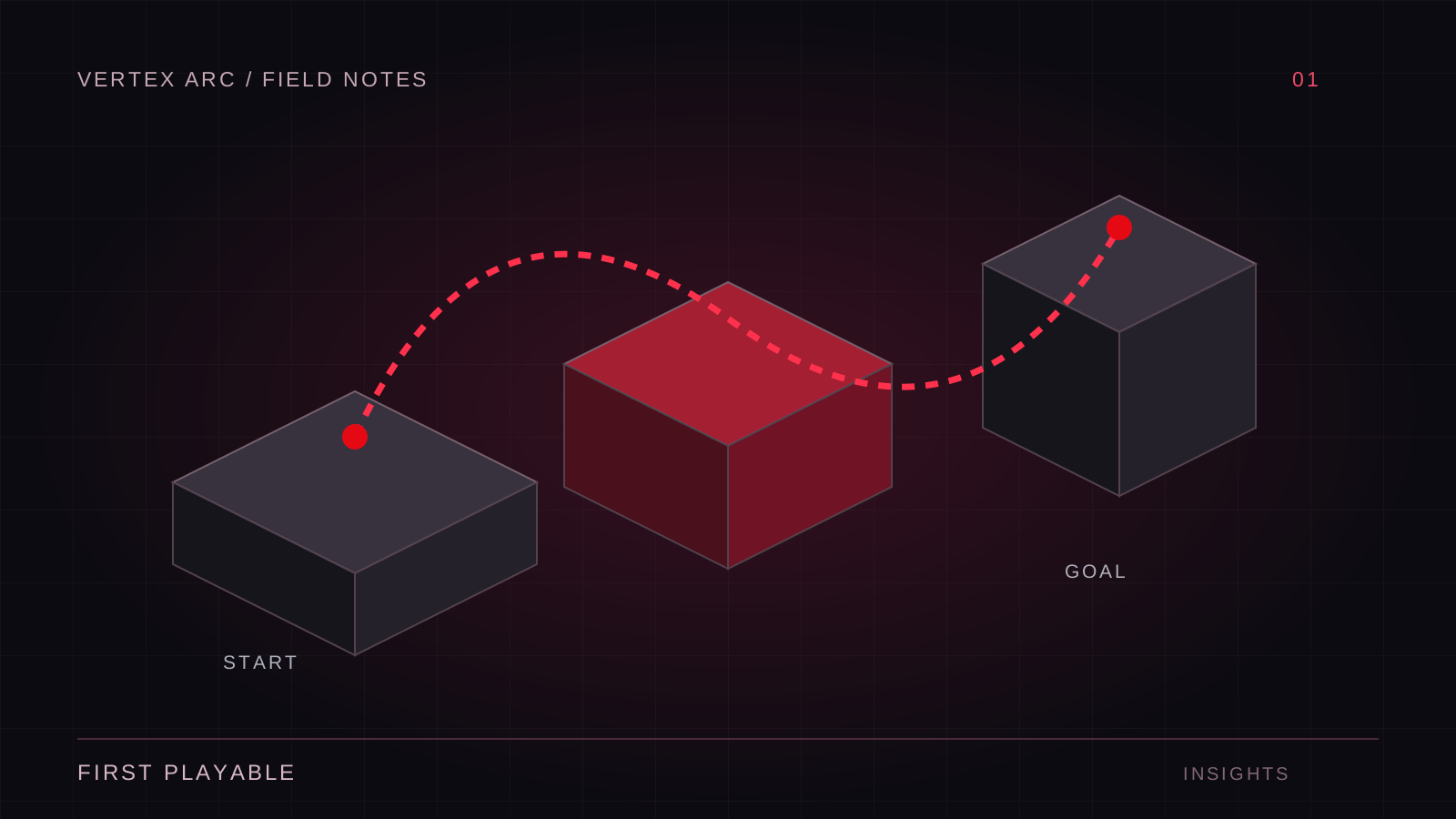
A game idea becomes useful when someone can make a decision inside it. A pitch might describe a ruined city, a grappling hook, and a race against sunrise. A prototype asks a narrower question: is moving between two rooftops interesting enough to repeat? That shift—from describing a possibility to testing an interaction—is the foundation of an effective first playable.
The goal is not to make a small finished game. It is to produce evidence that helps decide what to build, change, or abandon. At Vertex Arc, “playable early” is a guiding principle. The process below explains how to make that principle practical without treating a prototype as a promise of a finished production.
Start with a player decision
Write the core experience as a verb and a consequence. “Aim a grapple to preserve momentum” is more useful than “an exciting traversal adventure.” The first description tells you what input, response, and feedback the prototype needs. The second can justify almost any feature and therefore does little to protect the schedule.
Choose one question whose answer could meaningfully change the project. Can players judge a landing? Does switching tools create an interesting tradeoff? Can two people coordinate without voice chat? Avoid questions that only ask whether the team can implement a familiar feature. Technical feasibility matters, but it is different from demonstrating that a mechanic supports the intended experience.
Set the boundaries before building
Define a short playable sequence: enter, attempt the action, receive feedback, and restart. In the rooftop example, three platforms and a finish marker may be sufficient. Inventory, story scenes, cosmetic customization, and a large city are not needed to test momentum control. Put those ideas in a separate document rather than letting them quietly become requirements.
- Name the intended player and the input device.
- Identify the mechanic and the uncertainty it tests.
- List the minimum objects required for one complete attempt.
- Choose a stopping date and the evidence needed for a decision.
- Record what the prototype intentionally does not represent.
This final point is especially useful when sharing a build. An observer may mistake placeholder art for the intended style or a rough loading screen for the final user experience. A brief explanation of the test boundaries prevents feedback from drifting toward details that cannot yet answer the central question.
Build a complete loop with temporary parts
Use basic shapes, simple sounds, and a small test space. Temporary does not mean unreadable: a landing surface should be visually distinct from a hazard, and a successful action should produce an obvious response. If players cannot tell what happened, the test measures confusion rather than the quality of the mechanic.
Keep the adjustable variables close together. Movement speed, grapple range, cooldown, and camera distance should be easy to change without searching several scripts. Add a restart action early. A ten-second reset after every failure can make a short playtest feel slow and discourage the repeated attempts needed to judge a mechanic.
Separate design risk from technical risk
A local traversal prototype can answer questions about movement, but it cannot demonstrate that the same movement works under network latency. If online play is essential, build a separate technical experiment early. Likewise, a desktop editor session says little about thermal behavior on a phone. Label each experiment by the risk it actually addresses.
Observe before explaining
Give a new player a simple goal and watch the first attempt. Resist narrating the controls through every obstacle. Note where the player looks, which action they try first, and whether they understand the result. A mechanic that becomes enjoyable only after a long verbal explanation may need clearer feedback or a different introduction.
Afterward, ask concrete questions: “What did you expect that button to do?” and “Why did you choose the left platform?” These are easier to interpret than “Was it fun?” Record observations separately from suggestions. A player getting lost is evidence; adding a minimap is one possible response, not necessarily the best one.
Iterate on one meaningful change
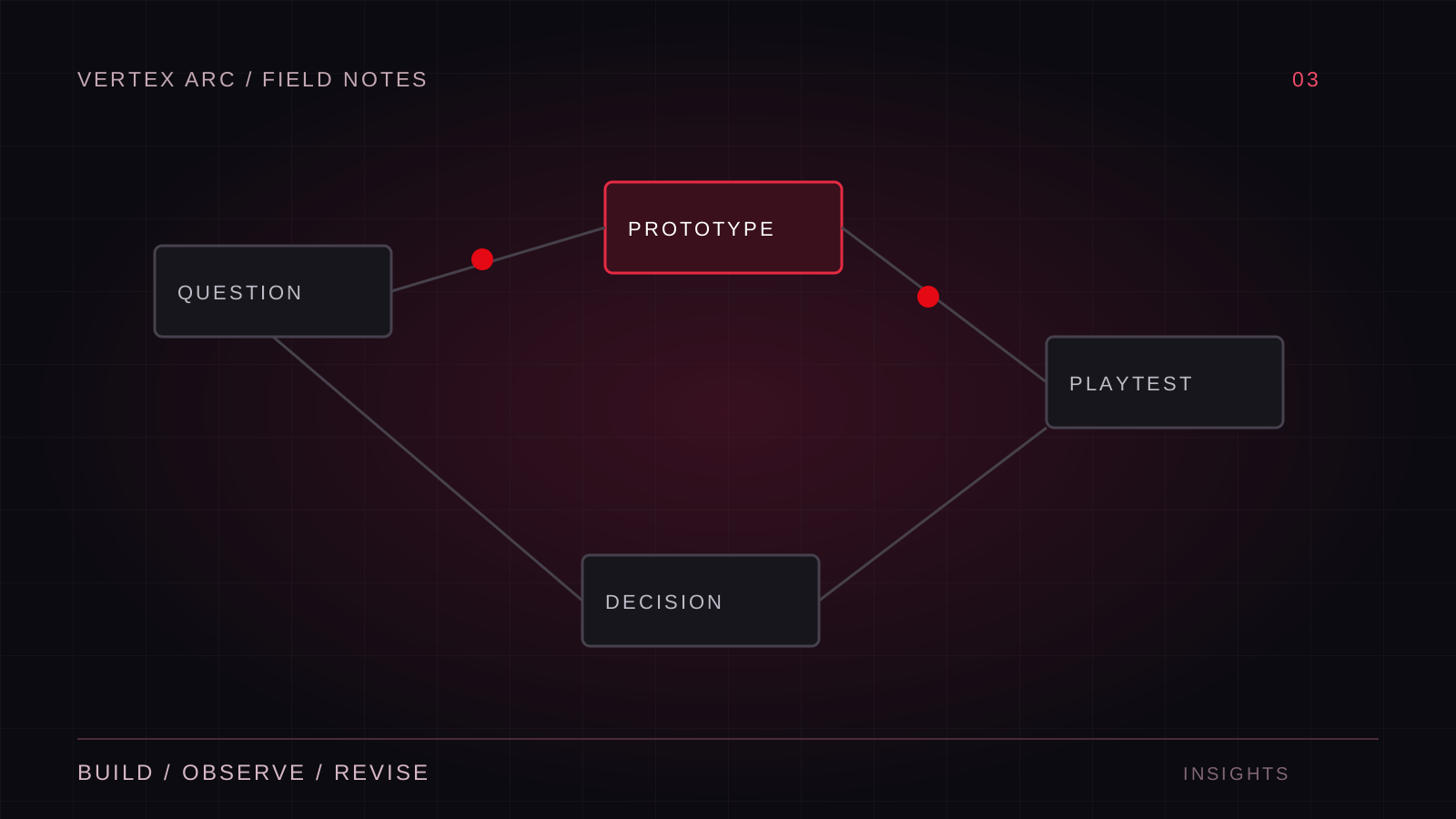
Choose the most consequential problem and adjust a limited set of variables. If landing is unpredictable, changing the camera, jump curve, level spacing, and acceleration at once makes it difficult to learn which change helped. Preserve a previous build so the team can compare the experience rather than relying on memory.
Keep a compact decision log: question, change, observation, next action. This record is valuable when a discarded idea returns later. It also gives collaborators a clear explanation of why a promising-looking feature did not survive testing. A prototype is useful knowledge even when its code is thrown away.
Decide what the evidence supports
End the prototype with a deliberate choice: proceed, revise the question, or stop. If the central interaction works, the next step may be a vertical slice that tests art, audio, production tools, and delivery together. If players struggle for a clear reason, another focused experiment may be worthwhile. If the loop depends on features far beyond the available resources, reconsider the concept before expanding it.
A successful prototype reduces uncertainty. It gives the team a playable reference, a sharper scope, and a defensible reason for the next investment. Build the smallest version that can teach you something important, then let what players actually do shape the game.