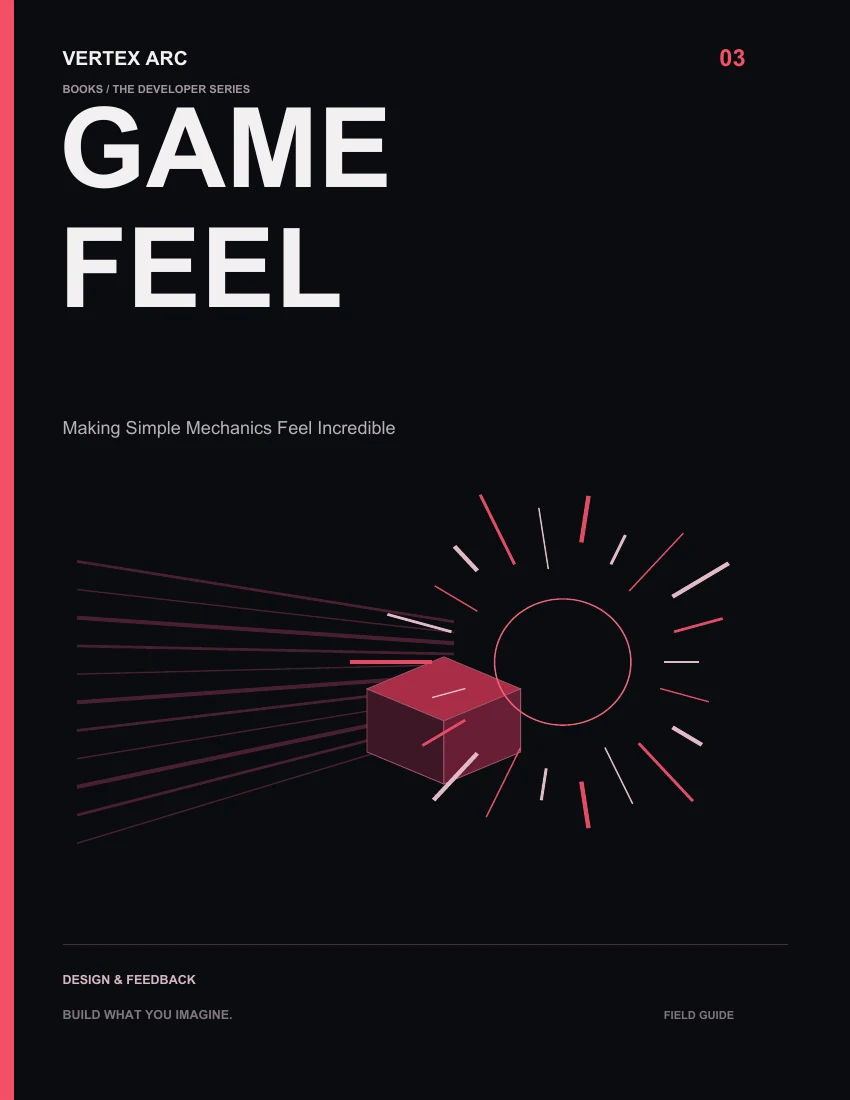
Design & Feedback
Game Feel
Make movement, combat, and interaction feel intentional. Tune the relationship between input, motion, camera, animation, sound, and impact.
15 pages · 14 min read · PDF

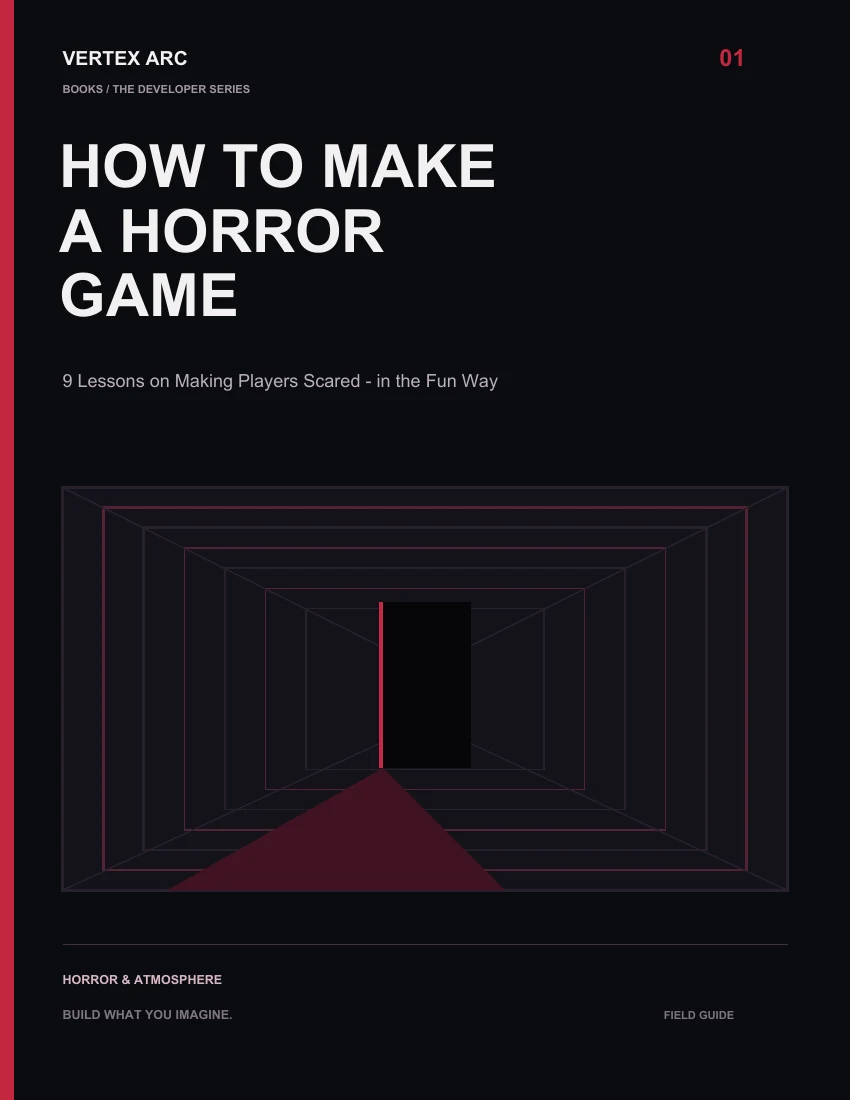
Volume 01 / Horror & Atmosphere
9 Lessons on Making Players Scared - in the Fun Way
Design fear that players choose to face. Nine practical lessons on vulnerability, believable worlds, unseen threats, and meaningful agency.
First edition · October 2026 · Published by Vertex Arc
Inside the guide
Also includes an introduction, practical exercises, a final checklist, and a conclusion.
The player opens a maintenance hatch because they chose to, not because a film editor cut to the next shot. That small difference is the material of interactive horror. The game can make someone reluctant to continue while still giving them a compelling reason to take the next step. Your job is to shape that conflict without turning it into irritation or helpless waiting.
This guide uses an original hypothetical project called Night Maintenance. The player is a caretaker inspecting an isolated flood-control station after its automatic alarms stop reporting correctly. There is no existing game behind this example. It gives us a shared setting in which to test design choices: narrow service passages, familiar machinery, unreliable reports, and a job that must be completed before the water rises.
The nine lessons are design hypotheses, not universal claims about psychology. People respond differently to darkness, pursuit, uncertainty, sound, and loss of control. Test with the audience you intend to reach, ask about comfort boundaries, and distinguish an interesting fear from a confusing interface. A player who cannot read a prompt is not experiencing the same tension as a player who understands the danger and chooses to proceed.
Read one lesson, build its exercise in a small greybox scene, and observe another person playing it. Keep a short notebook with three columns: what you intended, what the player did, and what you will change. A corridor with one reliable interaction can teach you more than an elaborate environment whose rules are still undecided.
Do not evaluate every moment of a horror game by whether the player feels powerful or immediately rewarded. A slow approach, a reluctant inspection, or a temporary retreat can be valuable if it creates anticipation and makes the eventual action meaningful. The experience still needs satisfaction, but that satisfaction may come from understanding, surviving, or resolving uncertainty rather than defeating an enemy.
Separate productive discomfort from friction. Productive discomfort asks a clear question: should I cross the exposed floor while the machinery is quiet? Friction asks the player to fight an unclear interaction prompt or repeat a long walk after a trivial mistake. The first creates a decision. The second consumes patience without developing the fear.
Players can enjoy the larger arc of tension and relief even when an individual moment feels unpleasant. They need enough trust in the game to believe that paying attention matters. If a cautious action produces understandable consequences, hesitation becomes part of play. If consequences seem arbitrary, the player may stop investing in the situation.
In Night Maintenance, a pump has to be restarted by hand. The controls are easy to operate, but each turn briefly silences the station's background hum. During that silence, the caretaker can hear movement beyond the service wall. The task is mechanically simple; the decision is whether to continue immediately or pause to listen. Completing it restores light to a safe route and gives the tension a useful resolution.
Make the action understandable and the situation unsettling. Difficulty operating the game is not a substitute for fear inside the game.
Build one room with a three-step interaction and a nearby uncertain sound. Test it first with no threat at all. Ask the player what they were worried might happen and whether finishing felt worthwhile. If they cannot explain the task, repair its feedback before adding an enemy. Compare a short version with a longer one to find when anticipation becomes waiting.
Write down the intended emotional sequence: notice, hesitate, commit, recover. Use that sequence to judge changes instead of increasing intensity everywhere.
Design & Feedback
Make movement, combat, and interaction feel intentional. Tune the relationship between input, motion, camera, animation, sound, and impact.
15 pages · 14 min read · PDF
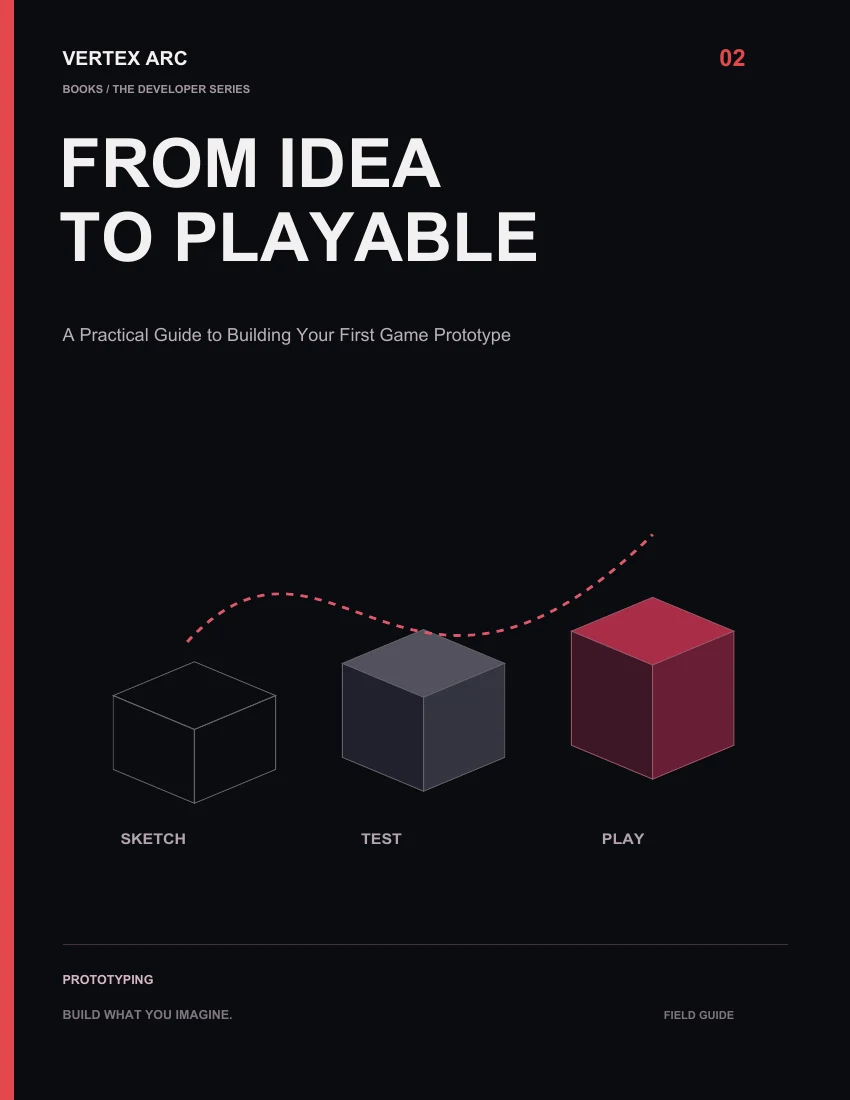
Prototyping
Turn a promising idea into a small, testable game. Find the loop, control scope, learn from players, and decide what deserves production.
17 pages · 16 min read · PDF