Game Design
Designing Progression That Creates New Decisions
Build rewards and unlocks around player mastery, meaningful choices, and a satisfying pace.
Progression is a promise that continued play will change the experience in a worthwhile way. That change might be a new ability, a deeper understanding of a system, access to a new place, or a more expressive way to build a character. A rising number alone does not guarantee that promise is fulfilled.
Begin with the game's core decisions. If the most interesting activity is choosing a route through danger, progression might reveal new routes or traversal options. If it is combining tools, unlocks might create new combinations. Rewards should deepen what is already compelling rather than postpone enjoyment until later.
Distinguish power from possibility
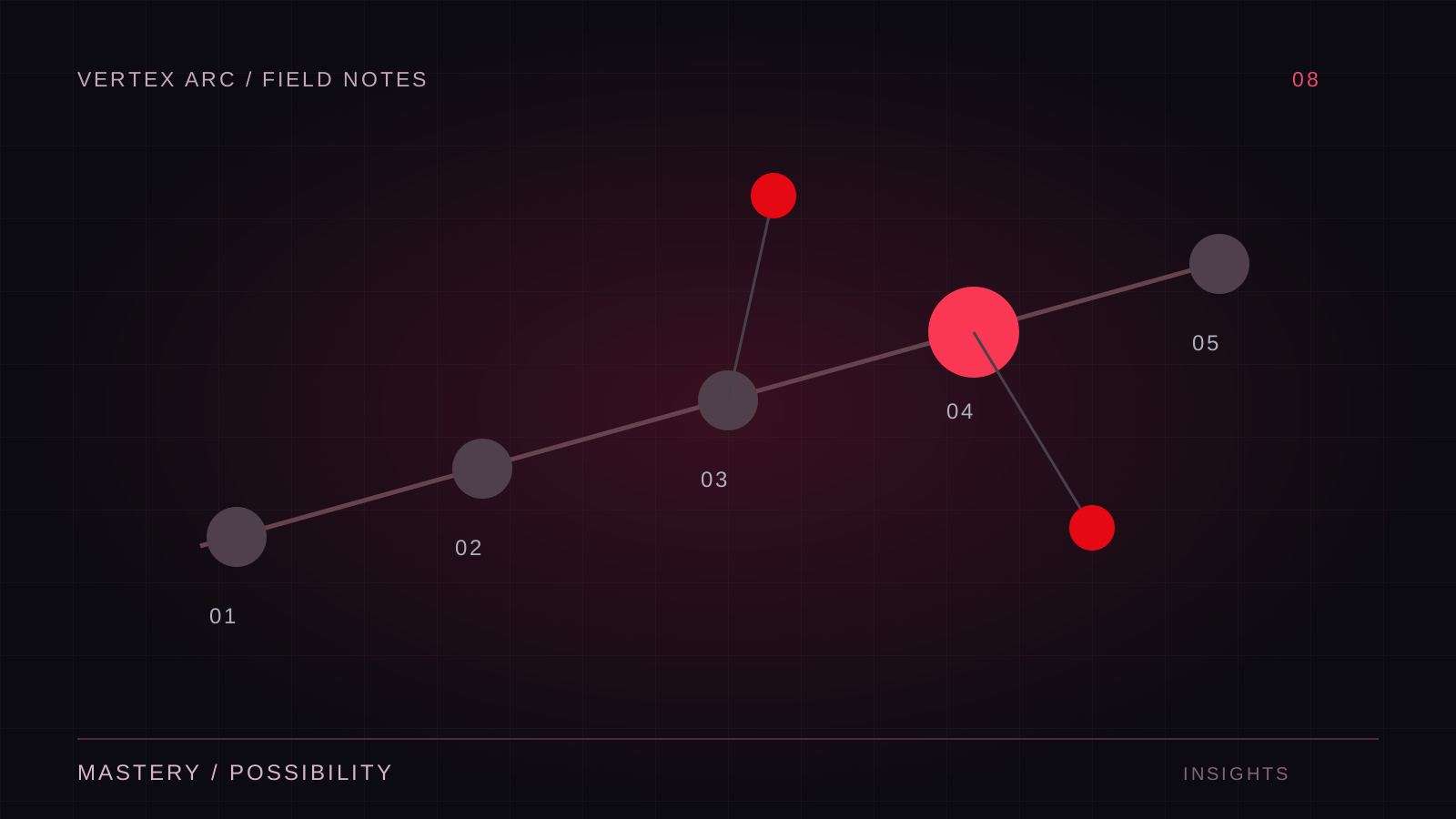
Vertical progression increases capability along an existing axis, such as damage or capacity. Horizontal progression adds alternatives, such as a tool with a different tradeoff. Both can be useful, but they create different balance problems. Constant power growth can invalidate old content; too many alternatives can overwhelm players who have not learned the basics.
Introduce choices at a pace that gives each one room to matter. A new ability deserves an encounter where its purpose can be discovered safely, followed by situations that test it in combination with existing skills. Unlocking several abilities at once can hide the value of each.
Design the reward loop explicitly
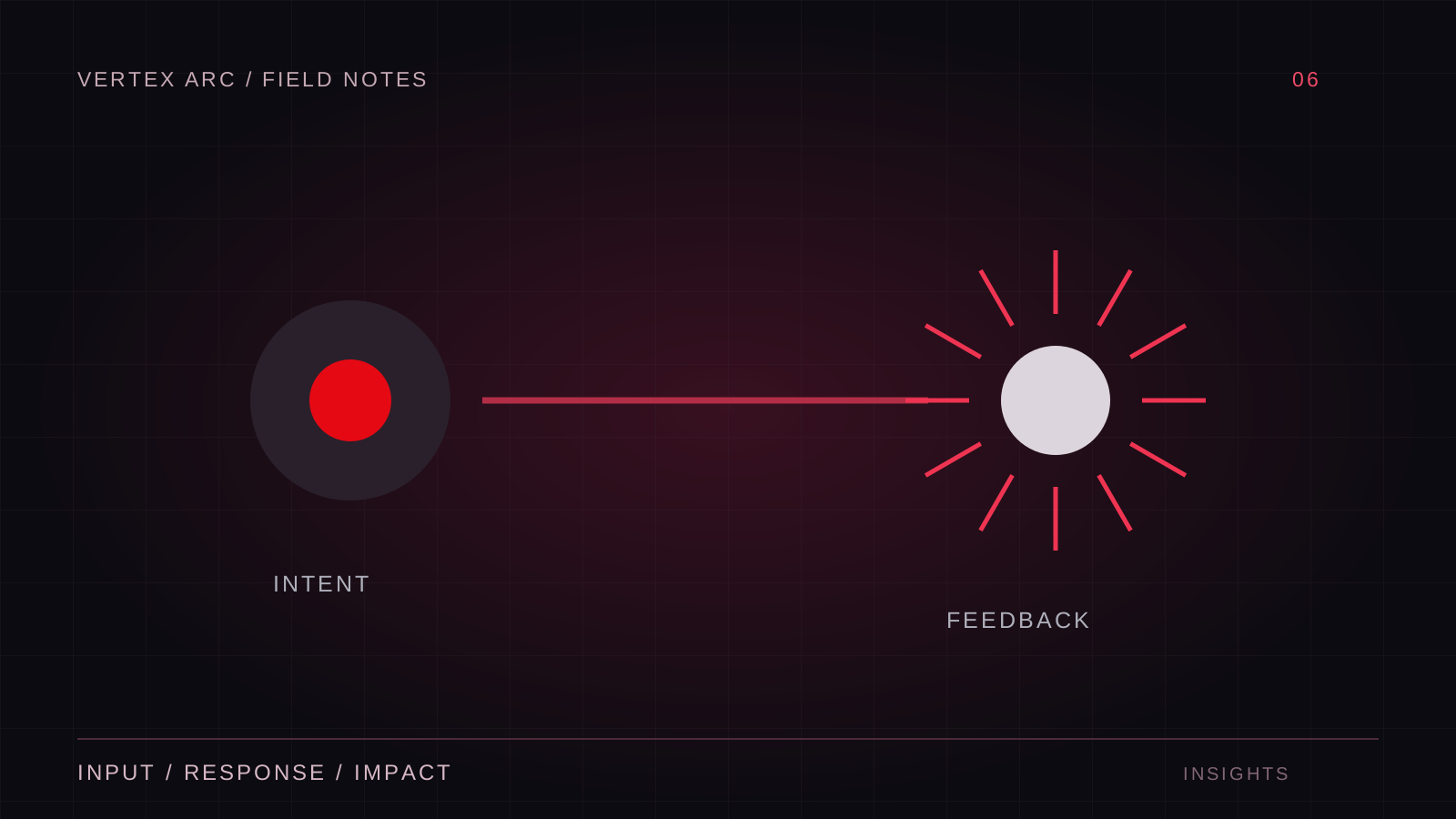
Map the action, evidence of progress, reward, and next opportunity. Players should understand what advanced them and what the reward enables. Avoid relying on a complex economy screen to explain a simple relationship. If a resource serves several roles, make the tradeoffs visible before the player spends it.
Prototype the economy outside the game
A small spreadsheet can expose pacing problems before implementation. Model a few plausible player paths: direct completion, exploration, repeated failure, and optional content. Use assumptions as assumptions, not as predictions. Replace them with observations as playtests become available.
Respect different play patterns
Some players explore every corner; others follow the main objective. Check whether either path causes the progression curve to collapse. An explorer should not automatically remove all challenge, and a focused player should not discover that optional grinding was secretly required.
Consider recovery from regretted choices. Respecialization, previews, or clear descriptions can reduce anxiety without removing consequences. If a choice is intentionally permanent, communicate its implications in terms the player can understand at that point in the game.
Test the spaces between rewards
The experience between unlocks matters as much as the unlock animation. Watch for periods where players repeat solved actions without learning anything new. Shortening that stretch, adding a new decision, or removing a redundant requirement may be better than adding another reward currency.
- Can players explain their next goal without consulting several menus?
- Does a new unlock change behavior in a visible way?
- Can a returning player understand where they left off?
- Are resource costs consistent with the opportunities to earn them?
- Does the final progression state still support interesting play?
Keep progression accountable to play
Progression systems should support motivation without becoming a substitute for a good game loop. Review unlocks that nobody uses and costs that create hesitation without interesting choices. Simplifying the system can make each remaining decision more valuable.
A strong progression arc lets players feel both the character's growth and their own. Plan the new possibilities, teach them clearly, and give them meaningful situations in which to matter. The reward then becomes part of the play, rather than a separate layer asking players to keep waiting.